Tell us your KSEB bill and roof type — we’ll show you the system size, panel count, and real cost, worked out the same way our engineers do it on-site.
Know your exact kilowatts before you spend a rupee.
- Tier-1 modules only
- KSEB net metering filed for you
- 5 years of free service visits
- ANERT registered installer
How much solar do you actually need?
Enter your average KSEB bill and roof details. The formula is shown, not hidden — this is a starting estimate; our site visit gives you the precise, shadow-checked figure.
Formula used: System size (kWp) = Monthly units ÷ (30 days × 4.5 peak sun hours × 0.78 performance ratio) — based on average Kerala solar insolation.
- Recommended system size
- Panels needed (550W each)
- Estimated monthly generation
- Possible cost range
- Suggested inverter type
Cost and subsidy figures are indicative and kept current in the CMS, so pricing stays accurate without a developer.
Valid 15 days · confirmed after a free site visit
Technology matched to your roof, not a catalogue
Shading changes which inverter setup actually makes sense. Here’s the comparison we walk every customer through.
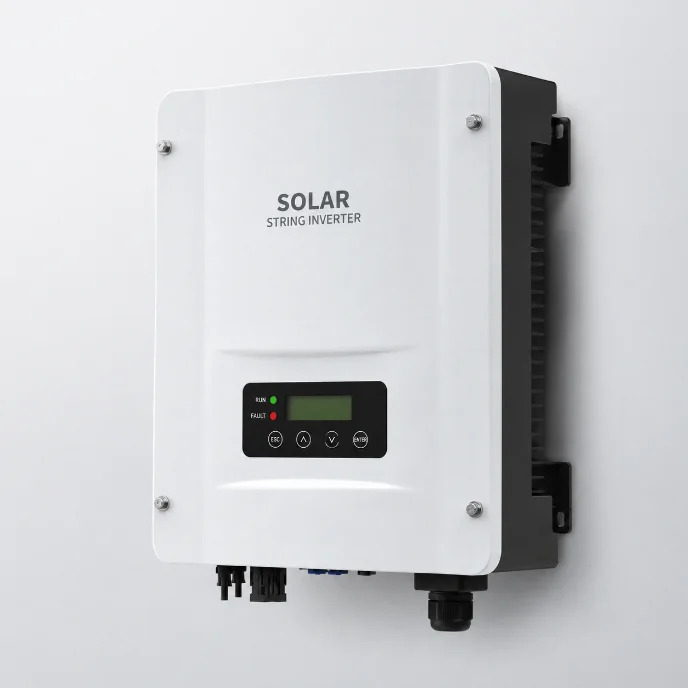
String Inverter
One inverter serves a full string of panels. Simple, cost-effective, well proven.
- Lowest upfront cost
- Best when the whole roof gets uninterrupted sun
- Single point of monitoring
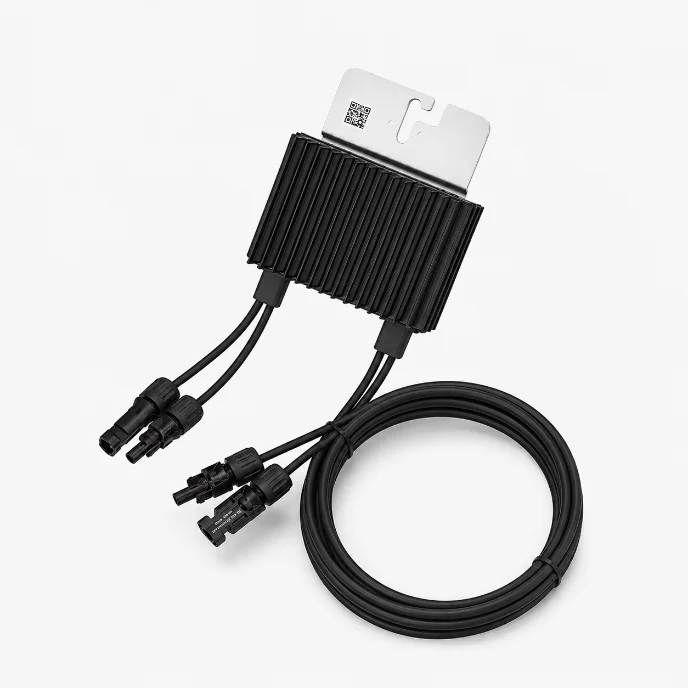
Power Optimizer
Sits at each panel, corrects for shading and mismatch, feeds a central inverter.
- Panel-level performance boost
- Lower cost than full micro-inverters
- Panel-level fault diagnosis
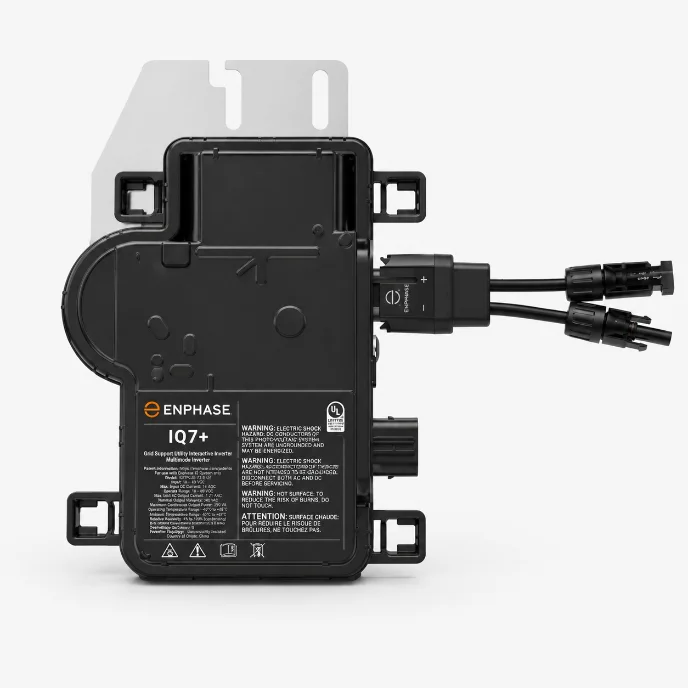
Micro-inverter
A dedicated inverter on every panel — full independence between panels.
- Best for roofs facing multiple directions
- One shaded panel never drags down the rest
- Panel-by-panel monitoring in the app
The questions we get asked the most
Real doubts from real Kerala customers — coastal corrosion, panel confusion, paperwork, all of it. Can’t find yours? Ask our team directly below.
Salt-laden coastal air does corrode standard steel faster. For homes within roughly 10km of the coast, we default to hot-dip galvanized steel — a much thicker zinc coating than ordinary GI — plus stainless steel fasteners. Inland installs are fine with standard GI. We confirm which one applies during the site visit based on your exact distance from the sea.
Yes — every structure is engineered to local wind-load requirements, and elevated tin-roof mounts are specifically designed to handle wind uplift while leaving an airflow gap underneath.
We use tile-hook mounts that clip around your existing tiles rather than drilling through them, so the roof stays watertight and the tiles stay intact.
A dedicated earthing system and surge protection device are fitted as standard on every installation, not as an add-on.
Mono PERC is the reliable, budget-friendly default. TOPCon runs a few points more efficient — useful when roof space is tight. Bifacial panels also capture reflected light from below, which mainly pays off on elevated or ground-mount structures rather than roofs mounted close to the surface. We walk you through which fits your roof during the site visit.
Not necessarily lower quality, but usually lower efficiency or a shorter warranty. We only source Tier-1 manufacturers regardless of the panel grade you choose, so the difference is efficiency and price — not reliability.
Only if you’re on a basic string inverter, where one shaded panel drags down its whole string. A power optimizer or micro-inverter isolates each panel, so shading on one doesn’t affect the rest — see the Technology section above.
Panels carry a 25-year performance warranty and typically degrade only about 0.5% per year, so most systems are still producing over 80% of original output after 25 years.
Subsidy amount depends on your system size and the scheme active at the time you apply — these change periodically, so we confirm the exact figure during your estimate rather than quoting a fixed number here.
Most Kerala households see payback in roughly 4–6 years depending on system size and how much of your generation you actually self-consume. Businesses vary more with load pattern and tariff — that’s exactly what the calculator above is built to estimate for your numbers.
Only if your system is sized to cover your full consumption and net-metering export credit fully offsets the rest. Most homes see a large drop, not necessarily zero — the calculator’s monthly generation figure gives you a realistic starting point.
Yes, we work with bank and NBFC financing partners for EMI options on household systems, and offer CAPEX, lease, and PPA structures for businesses — ask our team for current rates.
It varies by section office, but we file the application on your behalf right after your agreement and track it through to approval, so it’s not something you have to chase yourself.
Only briefly, during the final net-meter connection — and that’s scheduled with you in advance, not a surprise.
No, but we’ll need roof access and a decision-maker reachable at a couple of key points — mainly the initial layout confirmation and final handover walkthrough.
Monsoon rain does most of the cleaning naturally. In drier months, a wipe every 4–6 weeks is usually enough depending on dust and nearby trees — we offer AMC plans that include this if you’d rather not do it yourself.
Three separate layers: the panel manufacturer’s product defect warranty, a 25-year panel performance warranty, and TAGS’ own installation workmanship warranty — each with different terms, explained clearly in your quotation.
Our service line, directly — not the manufacturer. We coordinate any manufacturer warranty claims on your behalf so you only ever deal with one point of contact.
Commercial solar assets are generally eligible for accelerated depreciation under current tax provisions — the exact applicable rate is something we’d recommend confirming with your CA, since it depends on your specific filing.
Yes — CAPEX (you own it outright), lease, or a PPA where you pay only per unit of solar power consumed. Each has different payback math, which our commercial calculator above accounts for.
Work is phased and scheduled around your operating hours wherever possible, and live sections of the facility are isolated during electrical work — this is discussed and locked in during the site audit before any work starts.
Yes — group housing and apartment associations are a common setup for us in Kerala. Metering and cost-sharing can be structured per-unit or through the association, which we’ll walk through on a dedicated site visit.
Get a quick callback from our expert team
Read through everything and still unsure? Leave your number — a TAGS solar engineer, not a call-centre script, will call you back.
Typical callback time during business hours (9 AM – 7 PM, Mon–Sat) for enquiries raised through this site.
Every callback comes from an engineer who’s actually done Kerala rooftop installs — not a script reader.
The installation journey, start to finish
Pre-installation paperwork is often the slowest part in Kerala — here’s exactly where your time goes.
Site visit
Roof structure, shadow check, meter/panel inspection.
System design
Panel layout, structure type, inverter choice finalized.
Quotation
Itemized quote and agreement.
KSEB net-metering
Application filed and tracked on your behalf.
Subsidy filing
Central scheme paperwork handled for you.
Structure mounting
Tile hooks, tin clamps, or RCC podium — roof-specific.
Panel & wiring
Panels mounted, DC wiring run and secured.
Inverter setup
DC/AC connection and system commissioning.
Earthing & lightning
Protection sized for Kerala's storm frequency.
Net meter & handover
KSEB meter fitted, app set up, you're live.